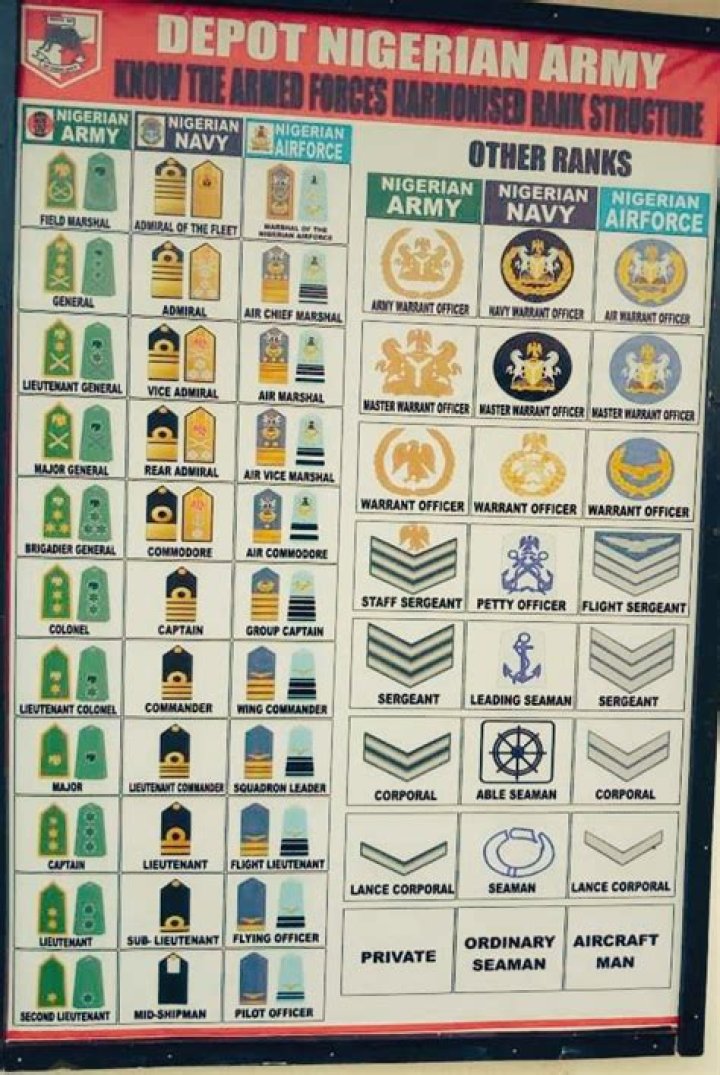
Navigating The Hierarchy: Understanding The Nigerian Army Rank Structure

David Mack
Published Jan 02, 2026
The Nigerian Army holds a pivotal role in safeguarding the nation, and its rank structure reflects a rich history and a complex organization. Understanding this hierarchy is crucial for anyone interested in the military, whether for career purposes, academic study, or general knowledge. The ranks of the Nigerian Army not only signify authority and responsibility but also embody years of tradition, discipline, and service to the nation. The rank system is meticulously designed to ensure efficient command and control, with each rank having specific roles and duties that contribute to the overall effectiveness of the military. As we delve into the intricacies of the Nigerian Army rank, it becomes evident how these ranks play a vital role in operational readiness and military organization.
From the highest echelons of leadership to the dedicated foot soldiers, each rank within the Nigerian Army is a testament to the commitment and sacrifice of its personnel. The rank structure serves as a framework that guides the promotion, evaluation, and career progression of soldiers, ensuring that those who rise through the ranks possess the necessary skills and experience required for their duties. In this article, we will explore the different ranks, their significance, and the pathways to advancement within the Nigerian Army.
As we embark on this exploration of the Nigerian Army rank, it is essential to appreciate the context in which these ranks operate. The military, with its unique culture and traditions, not only shapes the identity of its members but also plays a crucial role in the stability and security of the nation. Join us as we uncover the layers of the Nigerian Army's rank structure, highlighting its importance in both historical and contemporary contexts.
What Are the Different Ranks in the Nigerian Army?
The Nigerian Army rank structure is categorized into two main groups: commissioned officers and non-commissioned officers (NCOs). Each category has its hierarchy, starting from the entry-level ranks to the highest leadership positions. Below is an overview of the ranks:
- Commissioned Officers:
- Second Lieutenant
- Lieutenant
- Captain
- Major
- Lieutenant Colonel
- Colonel
- Brigadier General
- Major General
- Lieutenant General
- General
- Non-Commissioned Officers (NCOs):
- Private
- Corporal
- Sergeant
- Staff Sergeant
- Warrant Officer
How Do Promotions Work Within the Nigerian Army Rank Structure?
Promotion within the Nigerian Army is a systematic process that is influenced by various factors such as performance, experience, and time in service. Soldiers are evaluated regularly, and those who demonstrate exceptional leadership capabilities, technical skills, and commitment to duty are often considered for promotion. The process typically involves the following steps:
- Performance Evaluations: Regular assessments are conducted to gauge a soldier's effectiveness in their role.
- Time in Rank: Most ranks require a minimum period before a soldier is eligible for promotion.
- Training and Education: Completing certain military training programs or courses can enhance promotion prospects.
- Board Selection: Higher ranks often require selection by a promotion board, which reviews candidates’ qualifications and potential.
What Are the Responsibilities Associated with Each Rank?
Each rank in the Nigerian Army comes with its own set of responsibilities and expectations. Understanding these roles is crucial for anyone interested in military service. Here’s a breakdown of some key ranks and their responsibilities:
Commissioned Officers
- Second Lieutenant: Entry-level officers responsible for leading small units.
- Captain: Manages a company and oversees the training and welfare of soldiers.
- Colonel: Commands a regiment or brigade and is involved in strategic planning.
Non-Commissioned Officers (NCOs)
- Private: The foundational rank, focusing on individual skills and unit tasks.
- Sergeant: Responsible for training and mentoring junior soldiers.
- Warrant Officer: Technical experts who provide specialized skills and support to commanders.
What Is the Historical Context of the Nigerian Army Rank System?
The Nigerian Army's rank structure has evolved significantly since its inception. Initially formed during colonial rule, the Army has undergone various transformations to adapt to the changing political and social landscape of Nigeria. Key historical milestones include:
- Colonial Era: The Nigerian Army was established in 1900 as part of the British colonial administration.
- Independence: Following Nigeria's independence in 1960, the Army began to establish its own identity and rank structure.
- Military Coups: Various coups in Nigeria’s history have impacted the rank structure and leadership dynamics within the Army.
How Does the Nigerian Army Rank Compare to Other Countries?
The rank structure of the Nigerian Army shares similarities with those of other Commonwealth nations, reflecting a shared military heritage. However, there are also distinct differences that highlight the unique operational context of the Nigerian military. Key points of comparison include:
- Structure: Many countries maintain a similar hierarchy, but the titles and responsibilities may vary.
- Promotional Pathways: Different countries have unique criteria for promotions, influenced by their military culture and needs.
- Training and Development: The approach to training and professional development can differ significantly across nations.
What Role Do Ranks Play in Military Discipline and Order?
The rank structure is essential for maintaining discipline and order within the Nigerian Army. It establishes a clear chain of command, ensuring that orders are issued and followed systematically. The importance of ranks in military discipline can be summarized as follows:
- Authority: Ranks confer authority, allowing leaders to command respect and enforce regulations.
- Responsibility: Higher ranks carry greater responsibilities, ensuring accountability within the ranks.
- Unity of Command: A clear rank structure fosters unity and coherence in operations, crucial for mission success.
Conclusion: Understanding the Importance of the Nigerian Army Rank Structure
In conclusion, the Nigerian Army rank structure is a vital aspect of the military that reflects discipline, tradition, and a commitment to service. Understanding the different ranks, their responsibilities, and the promotion process provides valuable insights into the functioning of the Army. As Nigeria continues to face various security challenges, the effectiveness of its military, anchored by a robust rank structure, will remain crucial in ensuring national stability and security. Whether you are considering a career in the military or simply seeking to understand the dynamics of armed forces, the Nigerian Army rank system offers a fascinating glimpse into the world of military service.
Understanding The Impact Of Ari's Death In The First Wives Club
Unveiling The Life And Achievements Of Fatima Asghari
Unveiling The Talents Of Richard Libertini: A Journey Through Comedy And Film
Nigerian Army Rank Structure
Nigerian Army Ranks Badges Picture
Nigerian Army Rank, Salary Structure And Everything You Need To Know